Bloodied Streets in Kashmir: Nine Dead as Political Tensions Escalate in Pakistan-Administered Region
At least nine people were killed in recent clashes in Pakistan-administered Kashmir as protests over political representation and the JAAC crackdown intensify.
Rising Violence in Pakistan-Administered Kashmir
The volatile landscape of Pakistan-administered Kashmir has been plunged further into chaos following a series of deadly clashes on Tuesday. At least nine people were killed in separate incidents of violence, bringing the total death toll to 28 since the unrest began in early June. The violence comes as a massive protest march toward the regional capital, Muzaffarabad, has ground to a temporary halt, leaving thousands of demonstrators in a state of uneasy suspense.
Details of the Fatal Confrontations
The bloodshed unfolded across two primary locations. In the Poonch district, security forces conducted a raid on a residence on the outskirts of Rawalakot town. Officials stated the operation was triggered by intelligence regarding a hidden weapons cache. However, the raid devolved into a firefight, resulting in the death of one security officer and several others.
Simultaneously, in the Sudhnoti district, a separate violent encounter occurred when protesters blocked a security convoy. Authorities report that the convoy was targeted with a barrage of gunfire and stone-pelting. The clash claimed the lives of seven protesters and another police officer. While police maintain that their personnel acted in self-defense, the incident has further inflamed local anger.
The JAAC and the State’s Crackdown
Much of the current unrest is driven by the Jammu Kashmir Joint Awami Action Committee (JAAC). The group has become the face of a broad movement demanding political and economic reform. However, the Pakistani government has taken a hardline approach, proscribing the JAAC under anti-terrorism laws on June 5, effectively criminalizing the organization's leadership and activities.
In an effort to stifle the coordination of the protests, the government has imposed severe restrictions on internet and mobile phone services. These communication blackouts have made it increasingly difficult for international observers and journalists to verify the scale of the protests or communicate directly with the thousands of demonstrators currently gathered in Rawalakot.
The Core of the Conflict: Political Representation
While the violence is immediate, the root of the dispute is deeply systemic. The protests center on a long-standing grievance regarding 12 seats in the regional legislature. These seats are reserved for Kashmiri refugees who migrated to Pakistan after 1947 and currently reside outside the region.
The JAAC argues that this arrangement is a tool for Pakistan-based political parties to exert undue influence over the local government of Pakistan-administered Kashmir. Furthermore, protesters claim that this political structure diverts essential development funds away from the people currently living in the region. The tension reached a breaking point last month when the regional Supreme Court ruled that these seats are constitutionally protected, meaning they cannot be abolished without a formal constitutional amendment.
Security Outlook and Upcoming Elections
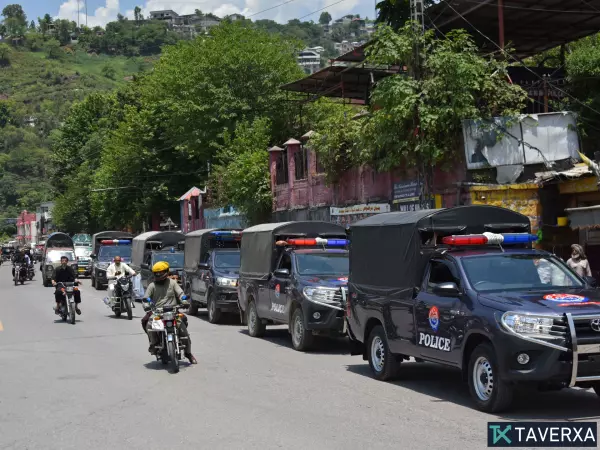
As the region braces for the upcoming elections scheduled for July 27, the security situation remains precarious. Approximately 4,000 police and paramilitary personnel have been deployed to maintain order and block the path of the planned march to Muzaffarabad. The Poonch commissioner has explicitly stated that marchers will be barred from passing through Rawalakot, forcing them to take treacherous mountain trails if they wish to reach the capital.
Despite claims from government officials, including the deputy commissioner of Muzaffarabad, that the capital remains "calm," the presence of thousands of determined protesters in Rawalakot suggests that the region is far from stability.