Amazon's Silicon Ambition: Moving Toward In-House Processors for Kindles and Fire TVs
Amazon is reportedly following Apple's lead by designing in-house processors for Kindle, Fire TV, and Echo devices to optimize AI performance and reduce costs.
The Shift Toward Vertical Integration
In a strategic move that mirrors the successful trajectory of Apple, Amazon is reportedly preparing to bring its processor design in-house. This transition toward a 'Customer-Owned Model' (COT) suggests that the e-commerce giant is looking to reduce its reliance on external chip suppliers to gain absolute control over its hardware ecosystem.
The shift is largely driven by the astronomical rise in production and data costs associated with the current Artificial Intelligence boom. As AI capabilities become central to every consumer device, the need for specialized, efficient silicon has become a financial and operational necessity. By designing its own chips, Amazon can optimize hardware specifically for its software, potentially leading to breakthroughs in battery life and processing speed.
Insights from the Supply Chain
According to renowned supply chain analyst Ming-Chi Kuo, Amazon is aggressively moving away from externally sourced processors. Kuo reports that Amazon is partnering with AIchip, a Taipei-based silicon design firm specializing in Application-Specific Integrated Circuits (ASICs). While AIchip has previously assisted Amazon with high-end AI server chips, this partnership is now expanding into consumer electronics.
The roadmap indicates that this strategy will enter full swing by 2027, with new custom silicon appearing across a wide array of Amazon's most popular devices, including:
- Kindle E-readers: Potential for faster page turns and better power efficiency.
- Fire TV: Smoother UI navigation and improved 4K/8K upscaling via AI.
- Echo and Alexa-enabled products: Faster local processing for voice commands.
- Ring and Blink: More efficient AI-driven motion detection and video analysis.
Learning from the Apple Playbook
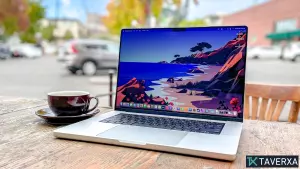
Amazon's strategy is a direct reflection of Apple's transition from Intel to the M-series chips in 2020. By owning the silicon, Apple achieved a level of integration between hardware and macOS that external vendors simply couldn't provide, resulting in industry-leading performance-per-watt.
For Amazon, the goal is similar. By controlling the end-to-end delivery of hardware, Amazon can ensure that a Fire TV doesn't just run an app, but that the hardware is physically optimized to handle that specific app's requirements. This 'end-to-end' approach was recently highlighted by Panos Panay, Amazon's head of hardware, who emphasized the importance of silicon integration during a recent CNBC appearance.
Early Evidence: The AZ3 Series
This is not an overnight decision, but rather the culmination of a gradual transition. In October 2025, Amazon introduced new Echo speakers featuring the AZ3 and AZ3 Pro custom chips. These processors are specifically engineered for 'ambient AI tasks,' such as detecting conversations from across a room and supporting complex vision transformers in the Echo Show series.
The success of the AZ3 chips serves as a proof-of-concept for the broader rollout. If Amazon can successfully implement custom silicon in its smart speakers, the jump to Kindle and Fire TV is the logical next step in its quest for hardware autonomy.
What This Means for Consumers
For the end-user, the promise of custom Amazon silicon translates to three primary benefits: performance, battery life, and cost. When a processor is designed solely for one device, it doesn't waste energy powering features the device doesn't need. This could mean Kindles that last for months longer on a single charge or Fire TVs that eliminate the 'lag' often associated with budget streaming sticks. Furthermore, reducing the cost of third-party licensing could allow Amazon to keep its device prices competitive while increasing the quality of the internal components.