A New Dawn for Damascus: Syria's Transitional Parliament Convenes Following Al-Assad's Fall
Syria's transitional parliament convenes for the first time in Damascus. President Ahmed al-Sharaa calls for national unity and economic reform following the fall of Bashar al-Assad.
Historic First Session of the People's Assembly
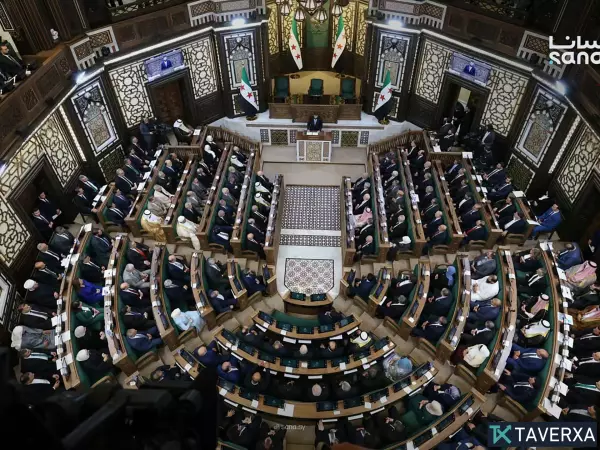
In a landmark moment for a nation scarred by decades of authoritarianism and war, Syria's newly appointed transitional parliament convened for its inaugural session in Damascus this Sunday. The gathering marks a pivotal step in the country's political evolution, occurring more than 18 months after the overthrow of long-time ruler Bashar al-Assad.
President Ahmed al-Sharaa, the former rebel leader who spearheaded the movement to topple the al-Assad regime, addressed the assembly with a call for unity and civic duty. During the session, lawmakers took their constitutional oaths, symbolizing a formal shift toward a new governing structure. Al-Sharaa urged the representatives to prioritize the "national interest above all," calling for the assembly to become a beacon of responsibility, competence, and the rule of law.
The Mandate for a Democratic Future
The primary objective of the People's Assembly is to dismantle the remnants of an oppressive political system and lay the groundwork for a sustainable democracy. Central to this mission is the drafting of a new national constitution, which aims to protect human rights and establish a balanced distribution of power.
For over 14 years, Syria was engulfed in a brutal civil war that claimed over half a million lives and displaced millions more. The al-Assad family's decades-long grip on power left the state fractured. The new parliament is tasked with healing these sectarian and political divides through a culture of dialogue and institutional respect.
Navigating Economic Ruin and Social Tension
Beyond the political restructuring, President al-Sharaa highlighted the dire necessity of economic revival. Syria currently faces a catastrophic economic state, worsened by years of international isolation and the physical destruction of its infrastructure. Al-Sharaa outlined three key pillars for the parliament's immediate focus:
- Economic Recovery: Implementing policies to stabilize the currency and revive local industries.
- Public Service Restoration: Strengthening essential services such as healthcare, education, and electricity to meet the needs of a suffering population.
- Global Investment: Actively attracting international capital to rebuild ruined cities and modernize the economy.
"Syria is writing a glorious history that reflects its heroism," al-Sharaa stated, emphasizing that the current leadership faces the dual responsibility of rebuilding the nation's infrastructure and restoring the dignity of the individual citizen.
Composition and Controversies of the New Chamber
The transitional parliament consists of 210 seats. The selection process reflects the logistical complexities of a post-conflict state. Two-thirds of the lawmakers were chosen last year via regional electoral colleges. However, the remaining 70 members were appointed directly by President al-Sharaa earlier this month.
The government has defended the decision to avoid immediate nationwide elections, citing "complex logistical challenges." Officials pointed to inaccurate population records and the ongoing instability in certain regions as primary barriers to a fully democratic vote at this stage.
International Reaction and the Path Ahead
The international community has viewed the convening of the parliament with cautious optimism. Claudio Cordone, the deputy United Nations special envoy for Syria, described the first session as a "key milestone in the country's political transition." Cordone affirmed that the UN and other international bodies are ready to support the assembly's efforts to stabilize the region.
Despite the hope accompanying the new parliament, the road to recovery remains fraught. Recent security breaches, including blasts in Damascus, serve as a reminder that the transition to peace is fragile. Nevertheless, the establishment of the People's Assembly represents a definitive break from the past and a tentative step toward a sovereign, democratic Syria.