The Rise of Ambient Health: Google Design Director Reveals the Vision Behind the Screen-Free Fitbit Air
Google's Design Director Jonah Becker explains the inspiration and strategy behind the screen-free Fitbit Air and why ambient health is the future of wearables.
A Bold Departure from the Digital Noise
In an era where our wrists are increasingly crowded with notifications, alerts, and glowing screens, Google has taken a contrarian approach with the launch of the Fitbit Air. In an exclusive conversation, Jonah Becker, the Design Director for Wearables at Google, detailed how the company consciously decided to strip away the display and buttons to create what he calls the 'archetype of the ambient fitness tracker.'
The Fitbit Air, priced at $99, represents a shift in philosophy. Instead of competing with the high-functionality of the Pixel Watch or the data-heavy focus of professional athletes' tools, the Air is designed to be a low-friction, comfortable companion that supports health without demanding constant attention.
From Friendship Bracelets to High-Tech Health
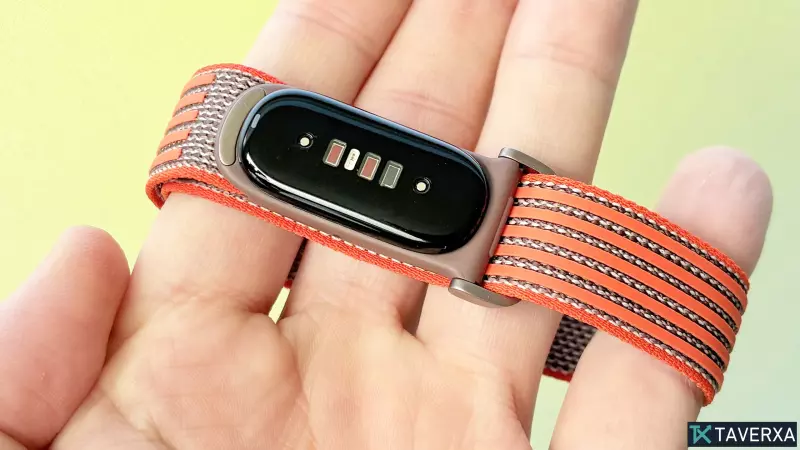
The inspiration for the Fitbit Air was surprisingly organic. Becker revealed that the design was modeled after the childhood nostalgia of friendship bracelets. "The idea was to have something super lightweight and comfortable—not a typical fitness watch," Becker explained. He noted that the goal was a 'casual, all-hours-in-the-day vibe,' mirroring how children wear friendship bracelets for months on end until they practically wear out.
This design choice led to a modular hardware system. The core tracking technology is condensed into a small, bean-like sensor that can be popped into various bands. To further embrace the 'creative' side of the user base, Google released a hardware development kit, enabling DIY enthusiasts to 3D-print their own custom bands, allowing the device to blend seamlessly into any personal style.
Positioning the 'Whoop Alternative for the Masses'
While the Fitbit Air enters a market featuring the Whoop 5.0, it targets a fundamentally different demographic. While Whoop caters to elite athletes and professional trainers who thrive on recovery insights and rigid training stats, the Fitbit Air is designed for the 'other 99.7%' of the population.
Becker emphasizes that for the general population, the biggest hurdle to health is often motivation and guidance rather than a lack of complex data. By removing the screen, Google has created a device that provides the essential biometric tracking needed for broad population health without the distracting 'noise' of a traditional smartwatch.
The Strategic Trade-off: Why No Onboard GPS?
One of the most debated points among reviewers has been the lack of onboard GPS. However, Becker maintains that this was a calculated decision based on the device's core identity. Including GPS would have compromised the Air's three most critical pillars: size, cost, and battery life.
Becker argues that for the vast majority of users, the lack of internal GPS is a non-issue. "The reality is that like 99% of people who might want to track a run or a hike... are going to have their phones with them," he stated, noting that paired GPS via a smartphone provides a sufficient experience for the target audience.
The Long Game: Google's Acquisition Strategy
The Fitbit Air is not just a new product; it is the culmination of a multi-year strategy. Becker revealed that the project has been in development since shortly after Google's $2.1 billion acquisition of Fitbit in 2021. For Becker, the launch is the first major step in delivering on the original promise of that merger.
By combining Fitbit's decade-plus of biometric data and health expertise with Google's world-leading data processing and AI capabilities, the company believes it can make more sense of human health than ever before. The positive reception to the Fitbit Air has given Google confidence in the screen-free form factor, hinting that this minimalist approach to wearables may be the future of the brand's ecosystem.