Medical Milestone: Humanoid Robots Assist in First Live Surgical Procedures
Researchers at UC San Diego have successfully used humanoid robots to assist in live surgical procedures for the first time, offering a potential solution to the global surgeon shortage.
A New Era for Surgical Robotics
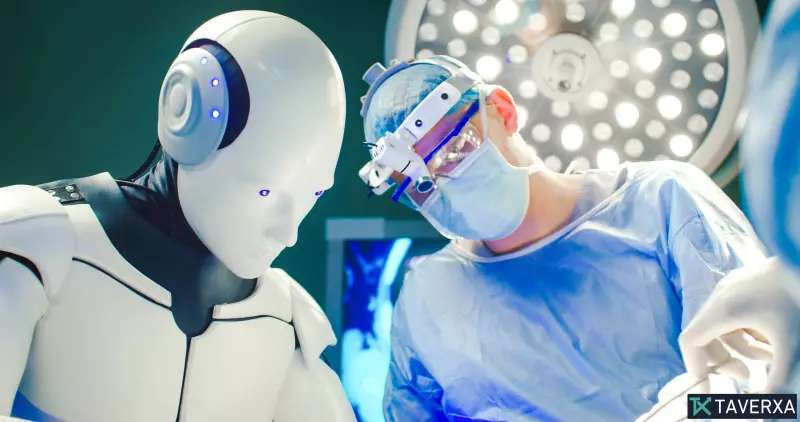
In a landmark achievement for medical science, the surgical field has witnessed a historic first: humanoid robots have successfully assisted in live surgical procedures. Researchers from the University of California San Diego have taken a massive leap forward in the integration of robotics into operating rooms, signaling a potential shift in how critical surgeries are approached.
The Clinical Breakthrough
During recent proof-of-concept experiments involving non-primate mammals, a team of dedicated engineers and surgeons utilized advanced humanoid robots to perform two separate laparoscopic gallbladder removal surgeries. In one instance, a humanoid robot collaborated directly with a human surgeon, while in the second, two humanoid robots worked in tandem to complete the procedure.
Michael Yip, a professor in the Department of Electrical and Computer Engineering at UC San Diego and a primary author of the research study published in Nature, highlighted the immense potential of this development. He noted that the ability for humanoid robots to be remotely operated or function autonomously could significantly democratize access to life-saving surgical care, particularly in regions where specialized medical professionals are scarce.
Addressing the Global Surgeon Shortage
This technological progress arrives at a critical time. A 2025 report from the American College of Surgeons identified a growing crisis, noting that 21 states currently face a shortage of general surgeons. Further projections from the Association of American Medical Colleges suggest that the healthcare sector could face a deficit of up to 86,000 physicians by 2036. By acting as force multipliers, humanoid robots could fill critical gaps, allowing human surgeons to oversee more complex tasks while the machines handle repetitive or support-based maneuvers.
Overcoming Hurdles
While the success of these trials is a major milestone, the researchers acknowledge that the field is still in its infancy. During the procedures, both robots required several recalibrations, which extended the operation times beyond standard human-performed surgeries. These challenges are being viewed as essential learning points to refine the dexterity and reliability of the robotic systems.
A Historical Perspective on Surgical Innovation
This development builds upon a legacy of medical robotics innovation:
- 1983: The 'Anthrobot' became the first robotic system to assist in arthroscopic knee surgery.
- 1985: The PUMA 560 system performed a CT-guided brain biopsy.
- 1992: The ROBODOC system revolutionized orthopedic surgery by preparing a femur for a hip replacement.
As AI continues to advance, the next phase of development will focus on greater autonomy, potentially allowing humanoid robots to manage more intricate steps of a surgical procedure independently, further cementing their role in the future of modern medicine.