FIFA Weighs Massive Expansion: Will the 2030 World Cup Feature 64 Teams?
FIFA President Gianni Infantino is considering expanding the 2030 World Cup to 64 teams. Explore the potential format, supporters from CONMEBOL, and opposition from UEFA and AFC.
The Future of Global Football: A New Horizon for 2030
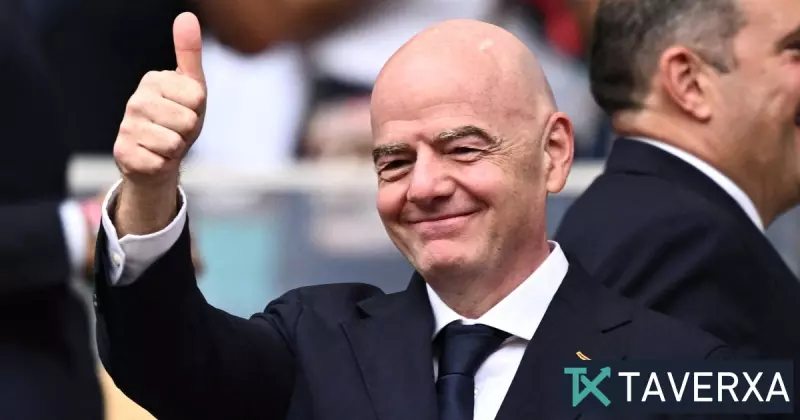
As the football world continues to navigate the transition to a 48-team format during the 2026 World Cup, FIFA President Gianni Infantino has revealed that the governing body is not ruling out an even larger expansion. The possibility of a 64-team tournament for the 2030 World Cup is currently under consideration, potentially transforming the world's most prestigious sporting event into a truly global festival of football.
Speaking with the Swiss news outlet Bluewin, Infantino indicated that the proposal for further expansion will be formally examined by FIFA's relevant committees following the conclusion of the 2026 tournament. This move comes as Infantino hails the 48-team model as a "huge success," asserting that it has democratized the game and provided essential opportunities for emerging football nations.
The Argument for Inclusion and Growth
Infantino has been a vocal proponent of expanding the tournament's reach, arguing that the 2026 expansion was "100 percent" the right decision. He highlighted the ability of smaller nations to compete and score on the world stage as evidence of the format's success. Specifically, he noted the impressive surge in African representation, with nine out of ten African teams reaching the knockout stages—a significant jump from the five teams that appeared in previous editions.
"If you don’t give smaller countries a chance to participate in the World Cup, they’ll lack the incentive to keep improving," Infantino stated, emphasizing that the tournament should be designed for the entire world, not just the traditional footballing superpowers.
Visualizing a 64-Team Tournament
While FIFA has not yet released a blueprint for a 64-team structure, analysts suggest a return to a modified traditional format. One likely scenario would involve 16 groups of four teams each. In this model, every nation would play three group-stage matches, with the top two from each group advancing to a massive 32-team knockout bracket.
Such a shift would drastically increase the volume of matches. For comparison, the 32-team era featured 64 games, while the 2026 tournament has grown to 104 matches. A 64-team event could potentially push the total to 128 matches, raising questions about logistics, player fatigue, and stadium requirements.
The Divide: Supporters vs. Opponents
The proposal has sparked a fierce debate within the football community, dividing the major confederations.
The Proponents: CONMEBOL's Vision
The strongest support comes from South America's CONMEBOL. Led by President Alejandro Dominguez, the confederation views the 2030 World Cup—the tournament's centenary—as a once-in-a-century opportunity to maximize inclusivity. The idea was initially championed by Uruguayan Football Federation President Ignacio Alonso in March 2025, framing the expansion as a fitting tribute to the 100th anniversary of the first World Cup held in Uruguay.
The Critics: UEFA and AFC Concerns
Conversely, football officials in Europe and Asia have expressed strong opposition. UEFA President Aleksander Ceferin labeled the expansion a "bad idea," citing concerns over the impact on European qualifiers and the overall quality of the tournament. Similarly, AFC President Sheikh Salman bin Ibrahim Al Khalifa warned that expanding to 64 teams could lead to "chaos," suggesting that it would open the door for endless demands to increase the number of teams to 132 or more.
Logistics of the 2030 Centenary Event
Regardless of the final team count, the 2030 World Cup is destined to be the most geographically diverse in history. The main tournament will be co-hosted by Spain, Portugal, and Morocco. However, to honor the centenary, three special matches will be played in Uruguay, Argentina, and Paraguay before the main event commences.
This unprecedented structure across six countries and three continents already presents a logistical challenge; adding another 16 teams would further complicate the burden on host nations and the international match calendar.
What Happens Next?
FIFA has not established a strict timeline for a final decision. Any change to the tournament's size must be approved by the FIFA Council. While the governing body is obligated to consider proposals from its members, it remains unclear whether the Council will prioritize the desire for inclusivity over the concerns regarding player welfare and competitive integrity.