Defying Geopolitical Tensions: US and Russian Astronauts Launch Joint ISS Mission
NASA and Roscosmos successfully launch the Soyuz MS-29 mission to the ISS, marking a rare diplomatic moment between the US and Russia amid global tensions.
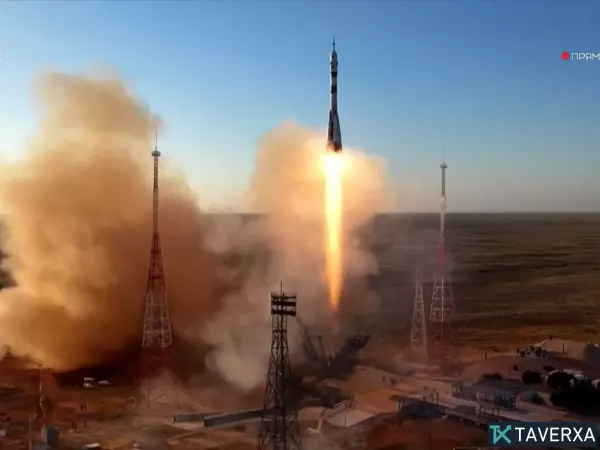
A Rare Display of Unity in Orbit
In a striking contrast to the escalating geopolitical frictions on Earth, the United States and Russia have once again demonstrated a commitment to scientific cooperation in the cosmos. On Tuesday, July 14, 2026, a joint crew of astronauts and cosmonauts successfully launched from the Baikonur Cosmodrome in Kazakhstan, bound for the International Space Station (ISS). The mission, utilizing the Russian Soyuz MS-29 spacecraft, serves as a poignant reminder that the pursuit of knowledge often transcends national conflicts.
The crew consists of NASA astronaut Anil Menon—marking his first-ever journey into space—alongside veteran Roscosmos cosmonauts Pyotr Dubrov and Anna Kikina. After a flawless ascent, the trio entered orbit and began their transit toward the orbiting laboratory, where they are scheduled to dock and begin an intensive eight-month residency.
Diplomatic Significance at Baikonur
The launch was marked by a significant diplomatic gesture: the presence of NASA Administrator Jared Isaacman. This visit represents the first time a NASA chief has traveled to the Russia-operated Baikonur spaceport in eight years, signaling a desire to maintain critical communication channels between the two space agencies.
During the pre-launch festivities, Isaacman met with Dmitry Bakanov, the head of Roscosmos. In a meeting with the crew, Isaacman expressed profound gratitude for the Russian agency's efforts, noting that the integrated preparation over the previous months reflected a level of "professionalism and dedication" that remains vital for the safety and success of the ISS program.
The Fragile Balance of Space Cooperation
The partnership between NASA and Roscosmos is a legacy of the post-Cold War era, transitioning from the fierce rivalry of the 1960s Space Race to a model of interdependence. However, this relationship has been severely strained since 2022, following Russia's invasion of Ukraine. While the two nations have continued to swap crews and share the ISS, the broader scope of their collaboration has dwindled.
Notably, the dream of a unified lunar exploration strategy has largely vanished. Potential Russian involvement in NASA’s ambitious Artemis program—aimed at returning humans to the lunar surface—has fallen apart. Instead, Moscow has pivoted toward Beijing, deepening its reliance on China for technology and energy exports and initiating collaborative plans for a separate Chinese-Russian lunar mission.
Life Aboard the Station
Upon arrival, Menon, Dubrov, and Kikina will join a diverse international cohort. The current ISS population includes NASA astronauts Jessica Meir, Jack Hathaway, and Chris Williams, European Space Agency (ESA) astronaut Sophie Adenot, and Roscosmos cosmonauts Sergei Kud-Sverchkov, Sergei Mikaev, and Andrei Fedyaev.
For the next eight months, these individuals will live and work in an environment where the boundaries of nationality are blurred by the shared challenge of surviving in the vacuum of space. Their joint research efforts will continue to provide invaluable data on human health in microgravity and the physics of the universe, ensuring that the ISS remains a beacon of international scientific achievement regardless of the volatility below.
Related Posts