Clash of Titans: England vs Argentina's Historic Rivalry Ahead of World Cup Semifinal
Explore the legendary and controversial history of the England vs Argentina football rivalry, from the 'Hand of God' to the 1966 'Robbery of the Century' before their World Cup semifinal.
A Collision of Footballing Giants
The sporting world holds its breath as England and Argentina prepare to face off in a high-stakes FIFA World Cup semifinal in Atlanta. This is more than just a match for a place in the final; it is a renewal of one of football's most storied and bitterest rivalries. With a legacy spanning decades, the encounter is steeped in political tension, cultural pride, and moments of absolute sporting brilliance.
For many, this matchup represents the ultimate grudge match. While the two powerhouses have avoided competitive meetings for 21 years, the animosity has only simmered. As the defending champions from Argentina look to secure another final appearance—led by the legendary Lionel Messi, the World Cup's record scorer—England enters the fray with a point to prove, buoyed by the form of stars like Jude Bellingham.
Deep Roots and Cultural Ties
Surprisingly, the rivalry began not with conflict, but with connection. The very foundations of Argentine football are inextricably linked to the British. The first recorded match in Argentina took place in 1867, played by British railway workers. This influence extended to the creation of iconic clubs like Newell’s Old Boys and Rosario Central, founded by expatriates. Even the naming of legendary institutions like River Plate and Boca Juniors reflects the linguistic and colonial ties of the era.
However, the early camaraderie quickly evaporated, replaced by a fierce competitive spirit that has been passed down through generations of fans and players alike.
1966: 'The Robbery of the Century'
The seeds of modern resentment were sown during the 1966 World Cup quarterfinal at Wembley. While England emerged victorious with a 1-0 win, the match is remembered in Argentina as El Robo Del Siglo (The Robbery of the Century). The game was marred by ill-temper and a controversial sending-off of Argentine captain Antonio Rattin.
The fallout was chaotic. Rattin refused to leave the pitch initially, leading to a lengthy delay and an eventual police escort. Tensions peaked after the game when England manager Alf Ramsey branded the Argentine players 'animals,' and several Argentine players were handed bans for assaulting officials. This match transformed a sporting rivalry into a geopolitical sporting feud.
1986: The Hand of God and the Goal of the Century
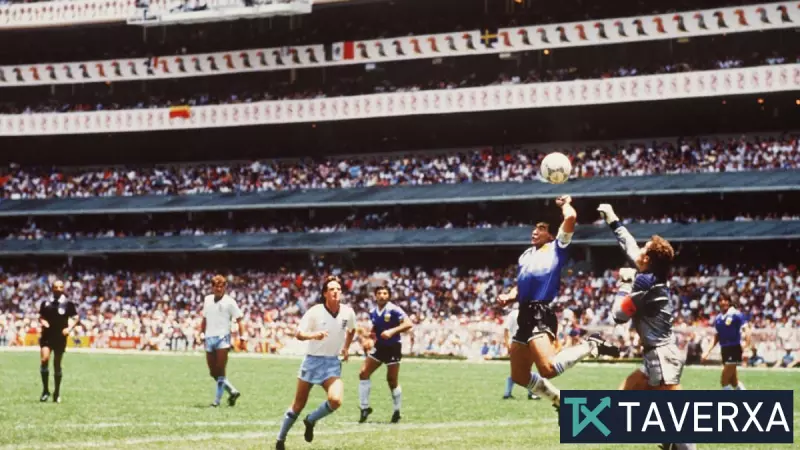
If 1966 provided the spark, 1986 provided the explosion. Set against the backdrop of the Falklands War (Las Malvinas), the quarterfinal in Mexico City was played in an atmosphere of intense nationalistic fervor. It was here that Diego Maradona etched his name into eternity with two of the most famous goals in history.
The first, the 'Hand of God,' saw Maradona use his hand to punch the ball past Peter Shilton—a goal that stood despite frantic English protests. Just four minutes later, he produced the 'Goal of the Century,' a 11-touch, 11-second masterpiece where he bypassed five English defenders to score. Argentina won 2-1, cementing Maradona as a national hero and a villain in English folklore.
1998 and 2002: Beckham and the Battle for Redemption
The rivalry evolved in the late 90s, shifting toward individual clashes, most notably between David Beckham and Diego Simeone. In the 1998 Round of 16, a pulsating encounter saw England's Beckham sent off after a retaliatory kick at Simeone. Argentina eventually progressed via a penalty shootout, leaving England heartbroken.
Redemption came in 2002. In a vital group stage match in Sapporo, Japan, England secured a 1-0 victory. David Beckham, once the most hated man in England after 1998, stepped up to score the winning penalty, knocking Argentina out in the group stages for the first time since 1962.
Looking Ahead to Atlanta
As these two nations meet once more on the world's biggest stage, the ghosts of 1966, 1986, and 1998 will inevitably haunt the pitch. Whether it is a quest for revenge for England or a quest for continued dominance for Argentina, this semifinal promises to be a chapter of epic proportions in a rivalry that transcends the sport itself.