Breaking Barriers: Djed Spence Makes History as England's First Muslim World Cup Player
Djed Spence makes history as the first Muslim player to represent England at the FIFA World Cup 2026, sparking conversations on representation, faith, and inclusion in football.
A Historic Moment on the Global Stage
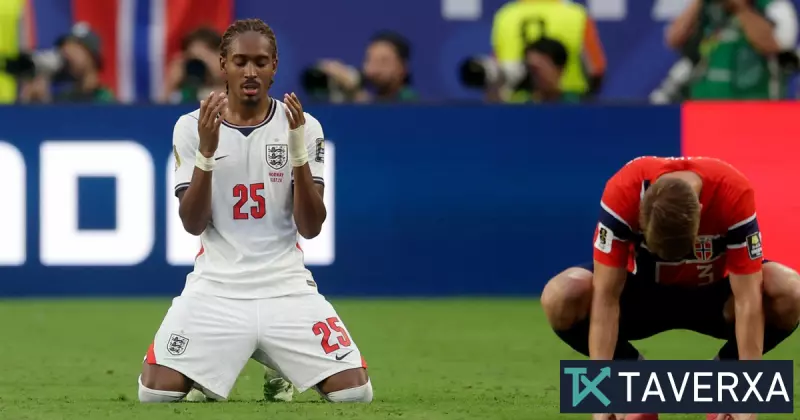
In a poignant scene that transcended the sport of football, Djed Spence, the 25-year-old defender for the England national team, knelt on the pitch of Miami Stadium on July 11, 2026. Raising his hands in a gesture of gratitude and prayer after England's victory over Norway in the World Cup quarterfinals, Spence became the first Muslim player to wear the Three Lions jersey at a FIFA World Cup. The victory not only secured England's place in the semifinals against their historic rivals, Argentina, but also marked a cultural milestone for millions of fans across the United Kingdom and the global Muslim community.
Beyond the Game: A Beacon of Inspiration
For Spence, the achievement is the culmination of a lifelong dream. Reflecting on his journey, the defender emphasized that the impact of his presence on the team extends far beyond his individual performance. "Being the first Muslim player to represent the Three Lions, it meant everything," Spence stated. "What makes me happy is that a lot of kids can look at it and be inspired. I feel it’s bigger than me and it’s great for generations to come."
His path to the World Cup was not without hardship. In May 2026, Spence suffered a broken jaw during a match against Chelsea, forcing him to play the tournament wearing a carbon-fibre protective mask. His resilience—transitioning from a substitute to a key defensive asset—has mirrored the symbolic breakthrough he represents for representation in English football.
The Long Road to Representation
While nations like France, Germany, and Spain have integrated Muslim internationals into their squads for decades, England's milestone has felt long overdue for many. For fans like 23-year-old Zain Gondal, Spence's presence provides a rare sense of visibility. "When I found out he was Muslim, I just liked him even more," Gondal shared, noting that seeing players who share his faith allows him to "see yourself a bit in them."
Riz Rehman, a former footballer and mentor who spent 15 years with the Professional Footballers’ Association (PFA), highlighted the systemic work required to reach this moment. Rehman played a pivotal role in establishing prayer rooms and Ramadan education for athletes, ensuring that players like Spence have the institutional support needed to balance faith and professional sport. Rehman, who mentored Spence after the latter converted to Islam a few years ago, describes him as a role model whose character serves as a bridge for others.
Navigating Hope and Hostility
Despite the celebration, the milestone is viewed through a complex lens. Shabna Zaheer, founder of 'The Scene'—a collective providing inclusive, alcohol-free viewing spaces—expressed a mix of pride and apprehension. "We’ve never seen an English footballer do that [offer Muslim prayers]," she noted, while admitting a fear of how the media and public might react. Her concerns are rooted in the reality of social media, where events promoting inclusive spaces are often met with demands for "integration" and xenophobic commentary.
This sentiment was echoed by Daniel Bennett, creative director of The Scene, who recalled the racist abuse directed at Marcus Rashford, Jadon Sancho, and Bukayo Saka after the 2020 Euro final. While Bennett believes representation matters, he cautions that a single player's journey cannot erase deep-seated systemic issues. Similarly, fan Zain Gondal argued that while football provides a platform, the responsibility for improving societal views on minorities lies with politicians rather than athletes.
Challenging Grassroots Bias
The conversation around Spence's rise also sheds light on the challenges faced at the youth level. Mark Overall, a goalkeeping scout and coach, pointed out the persistent bias in talent identification. Overall recalled coaching youth players in Southall who trained through the rigors of Ramadan, showing immense work ethic, yet he noted that some older scouts still harbor prejudices, often favoring white, Christian players over candidates from Asian or Muslim backgrounds.
However, Spence's success serves as a powerful counter-narrative to these biases. By excelling on the world's biggest stage, he proves that faith and ambition are not mutually exclusive, but can indeed be complementary. As England prepares for its high-stakes clash with Argentina, Djed Spence stands not just as a defender of the goal, but as a pioneer for a more inclusive era of British sport.