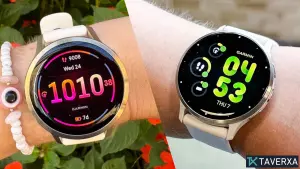
Apple Watch Series 11 vs. Fitbit Air: Which Fitness Tracker is Truly Accurate?
We tested the Apple Watch Series 11 against the Fitbit Air in a 5,000-step walk. Discover which wearable wins in step accuracy, heart rate, and battery life.
The Battle of the Wearables: Premium Power vs. Minimalist Efficiency
In the ever-evolving landscape of wearable technology, consumers are often faced with a stark choice: do you want a feature-rich smartwatch that acts as a second phone on your wrist, or a streamlined fitness tracker designed for one thing—health data? To settle this debate, we put the high-end Apple Watch Series 11 and the budget-friendly Fitbit Air through a rigorous real-world stress test.
The setup was simple but demanding. We embarked on a 5,000-step walk through the hilly streets of Seattle, Washington. To ensure an unbiased result, we utilized a manual tally counter (one click per 100 steps) to establish a strict control baseline. With the Apple Watch on the left wrist and the Fitbit Air on the right, the goal was to see if a $399 investment yields significantly better accuracy than a $99 alternative.
Tech Specs: A Study in Contrasts
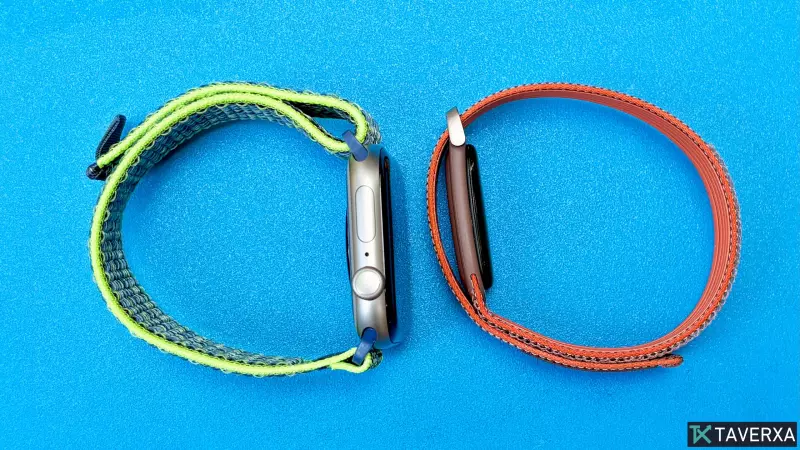
Before diving into the numbers, it is essential to understand the philosophical differences between these two devices. The Apple Watch Series 11 is a powerhouse of connectivity. It features a brilliant touchscreen, a suite of physical buttons, a built-in altimeter, and onboard GPS, allowing it to track location and elevation independently of a smartphone.
In contrast, the Fitbit Air is an exercise in minimalism. It is a screenless, buttonless band that prioritizes comfort and battery longevity, lasting up to a week on a single charge. However, this simplicity comes with a trade-off: it lacks onboard GPS and an altimeter, meaning it must 'piggyback' off a paired smartphone to log distance and elevation data during outdoor activities.
The Results: Breaking Down the Data
After completing the 5,000-step trek, the data revealed a surprising level of competitiveness, though a clear winner eventually emerged.
Step Counting and Distance
Both devices performed admirably in step tracking. The Apple Watch Series 11 recorded 5,053 steps, while the Fitbit Air logged 5,108. In the world of fitness tracking, any result within 150 steps of the actual count is considered excellent. While both passed this test, the Apple Watch was marginally closer to the manual count.
Distance measurements were similarly close. The Apple Watch tracked 2.63 miles, whereas the Fitbit Air estimated 2.72 miles. While the Fitbit suggested a slightly faster pace and more ground covered, the difference was negligible for the average user.
The Elevation Gap
The most significant discrepancy appeared in the 'climb' or elevation data. Given that the Seattle walk was particularly hill-heavy, the altimeter data was crucial. The Apple Watch tracked a climb of 372 feet, which aligned closely with external benchmarks. The Fitbit Air, however, recorded only 205 feet—a concerningly low figure that suggests its reliance on paired phone data may not be sufficient for precision elevation tracking.
Heart Rate and Battery Efficiency
Where the Fitbit Air truly shone was in heart rate monitoring and energy consumption. Both devices were a perfect match in recording average (119 bpm) and maximum (153 bpm) heart rates. Furthermore, the battery disparity was jarring: the Apple Watch consumed 6% of its battery during the 42-minute stroll, while the Fitbit Air used a mere 1%.
The Final Verdict: Who Wins?
When weighing accuracy against value, the Apple Watch Series 11 takes the crown. Its superior integration of GPS and an onboard altimeter ensures that your steps and elevation are tracked with professional-grade precision.
However, for the user who isn't concerned with precise elevation data and prefers a 'set it and forget it' device with week-long battery life, the Fitbit Air offers incredible value. It proves that you don't need to spend $400 to get highly accurate heart rate and step data. But if precision is your priority, the investment in Apple's ecosystem pays off.